
ServiceNow's B2B Marketing Playbook
How Fred Luddy went from bankruptcy to building a multi-billion-dollar ITSM platform fueled by code, culture, and a customer-first philosophy.

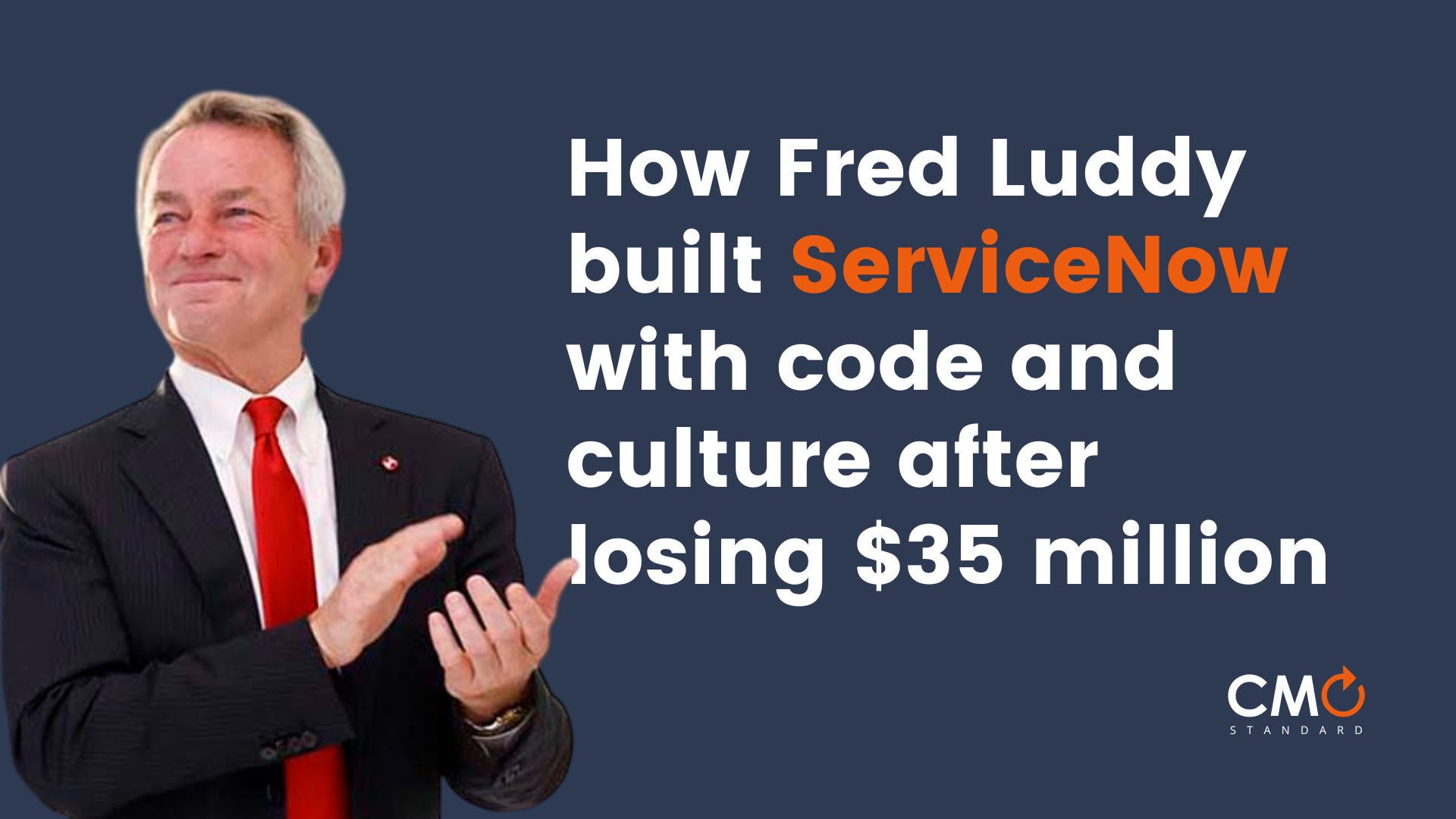
In 2002, Fred Luddy was CTO of Peregrine Systems when the $4 billion IT giant collapsed. A massive accounting fraud within the organization landed several top executives—including the CEO—in prison.
Although Fred’s record remained clear, he lost $35 million of his net worth practically overnight. From those ashes rose a phoenix: ServiceNow.
Launched in 2003 as a cloud-based IT Service Management (ITSM) solution, ServiceNow powers over 8,500 companies worldwide, ranking among the top 40 in its segment.
In this playbook, we will review 3 Growth Principles, 5 CMOs, 10 Tactics, and ServiceNow’s Marketing Statistics—with Examples and 🔍 Inside Scoops.
3 Growth Principles
Homogenizing the Infrastructure
By 2009, ServiceNow was doubling its revenue year after year. It counted some of the world’s largest companies—UBS, Deutsche Bank, Intel, GE, and Johnson & Johnson, to name a few—among its customers.
However, ServiceNow was a cloud platform in an era without cloud infrastructure. Its data center—a secondhand Dell server bought on eBay and stashed in a closet—wasn’t built for such high volumes. This led to constant outages.
What saved ServiceNow from near collapse was standardizing the infrastructure—same tools, processes, and technology for everyone. It eliminated redundancies and improved resolution times, laying the foundation for stability and growth.
Going Wide
After Peregrine Systems went bust, Fred took refuge in his San Diego home and began building low code/ no code extensible platforms. The result was an intuitive, forms-based workflow that required no IT setup and integrated seamlessly with third-party applications.
Fred reimagined IT software management as an IT support product. But even then, ServiceNow hadn’t fully realized its potential. That changed during a user group meeting when CERN showcased how it had built 4,000 applications on the ServiceNow platform.
Initially an ITSM tool, ServiceNow expanded into HR and customer service, using small changes like renaming incidents as cases, triggering a "snowball effect." The company reached $1 billion in revenue in 12 years, but it only took 2 more years to reach $2 billion.
🔍 Inside Scoop
The idea of being a founder at 50 felt inconceivable to Fred Luddy. All his heroes—Steve Jobs, Bill Gates, Larry Page, and Sergey Brin—had all built their products, as Fred put it, “right out of puberty.” So, two weeks before his birthday—49 years and 346 days, to be exact—he launched ServiceNow.
With no sales or marketing team, Fred hit the road, driving around San Diego County in his car in search of prospective customers. He offered the software for free in exchange for honest feedback. This customer-first, feedback-driven philosophy deeply shaped both the product and culture of ServiceNow.
Making a $2.5 Billion Decision
In 2011, VMware approached ServiceNow with an acquisition offer. At a time when multi-billion-dollar exits were rare, VMware proposed to buy the company for $2.5 billion. Fred Luddy, then 55, twice bankrupt, and a new father, was ready to sell.
Sequoia Capital, confident in the company’s potential to reach a $10 billion valuation, countered with a proposal to inject $100 million in capital and acquire additional shares. Ultimately, ServiceNow stayed put. Today, with a valuation of over $220 billion, ServiceNow is worth 88 times VMware’s offer.
"I would advise companies that receive an acquisition offer—do not get charmed by a number that seems like a big number. The only question that matters is: what can this company be 5 years from now, 7 years from now, 10 years from now? That is the question. How big is your ambition? And let it ride."
- Doug Leone
🔍 Inside Scoop
Doug Leone, a Sequoia partner, learned of VMware’s offer and told Fred Luddy, “You’re getting screwed.” He believed ServiceNow was worth far more than $2.5 billion. Doug also knew that public companies were required to seek the highest valuation before a sale. But ServiceNow wasn’t public.
Doug’s relentless research led him to the Honorable William B. Chandler, the author of merger and acquisition laws. At the next board meeting, as lawyers debated, Doug stunned everyone by bringing in Bill Chandler, who confirmed that the rule also applied to private companies, effectively killing the VMware deal.
ServiceNow’s CMOs
Colin Fleming, CMO of ServiceNow (9 months; present)
Colin Fleming has been the CMO of ServiceNow since May 2024.
Prior to ServiceNow, Colin spent over 13 years at Salesforce in roles including EVP of Global Marketing and SVP of Global Brand Marketing. He also held leadership positions at eSoles Custom Footbeds and EventPro Strategies.
Before transitioning to marketing, Colin was a professional racing driver for Red Bull Racing Formula 1. He studied marketing at San Francisco State University and Scottsdale Business Institute.
Michael Park, CMO of ServiceNow (2 years, 4 months)
Michael Park served as the CMO of ServiceNow before advancing to his current role as the Global Head of AI Go-To-Market at ServiceNow.
Michael's experience spans EagleView, HP, Microsoft, SAP, Siebel Systems, and Procter & Gamble. He is also an independent board director for Digimarc.
Michael holds a bachelor's degree in Economics and Finance from the University of Rochester and an MBA from Harvard Business School.
Alan Marks, CMO of ServiceNow (1 year, 7 months)
Alan Marks served as ServiceNow’s CMO, following nearly three years as the company’s Chief Communications Officer.
Prior to ServiceNow, Alan worked with Emerson Collective, eBay, Nike, Gap, and Avon Products. He is currently on a career break.
Alan holds a bachelor's degree from University of North Carolina at Chapel Hill and a master’s from New York University.
Dan Rogers, CMO of ServiceNow (3 years, 9 months)
Dan Rogers Dan Rogers served as ServiceNow's CMO for about 4 years, during which he was part of the high-growth leadership team that drove the company from $1 billion to $5 billion in annual revenue.
Dan is currently the CEO at LaunchDarkly. He has also held key leadership positions at Rubrik, Symantec, Salesforce, AWS, Microsoft, Dell, and Accenture.
He holds a bachelor's degree from the University of Birmingham and an MBA from Harvard Business School.
Beth White, CMO of ServiceNow (4 years, 9 months)
Beth White served as CMO at ServiceNow from January 2012 to September 2016.
Beth is currently a CMO Advisor at Hammerspace. Previously, Beth held key leadership roles at EMC, Data Domain, Aarohi Communications, Emulex/Vixel Corporation, Global Accelerator and 54th Street Partners, Borland Software Corporation, Hitachi Data Systems, and Groupe Bull.
Beth holds a bachelor's degree from Northern Arizona University.
ServiceNow’s Marketing Tactics
1. Event Marketing Strategy
ServiceNow’s flagship event, Knowledge, brings together professionals and experts from various fields. In 2024, it attracted over 20,000 attendees to Las Vegas, featuring keynotes, networking sessions, demos, certifications, expos, and celebrity appearances.
Beyond Knowledge, ServiceNow hosts Innovation Park roadshows across the U.S., World Forums globally, and the Federal Forum for the public sector. The company also extends its presence at major industry conferences, including AWS re:Invent, SxSW, Black Hat USA, Microsoft Ignite, Gartner IT Symposium, and HIMSS.
🔍 Inside Scoop
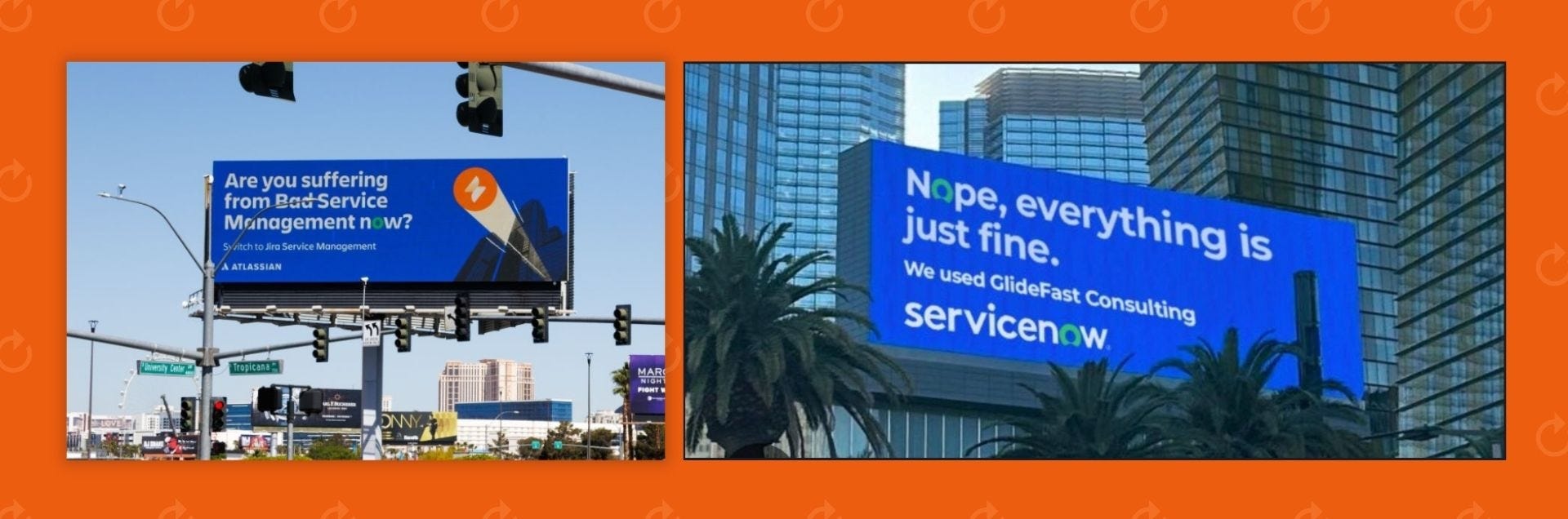
At Knowledge 2024, Atlassian, a ServiceNow competitor, placed billboards across Vegas to promote Jira Service Management. Adding fuel to the fire, the design featured a signature element from ServiceNow’s branding—the “o” in Now.
The stunt didn’t go unnoticed and raised a few eyebrows. Glidefast, a ServiceNow partner, quickly fired back with a counter-billboard, ensuring Atlassian’s move didn’t go unanswered.
2. Integrated Marketing Campaigns
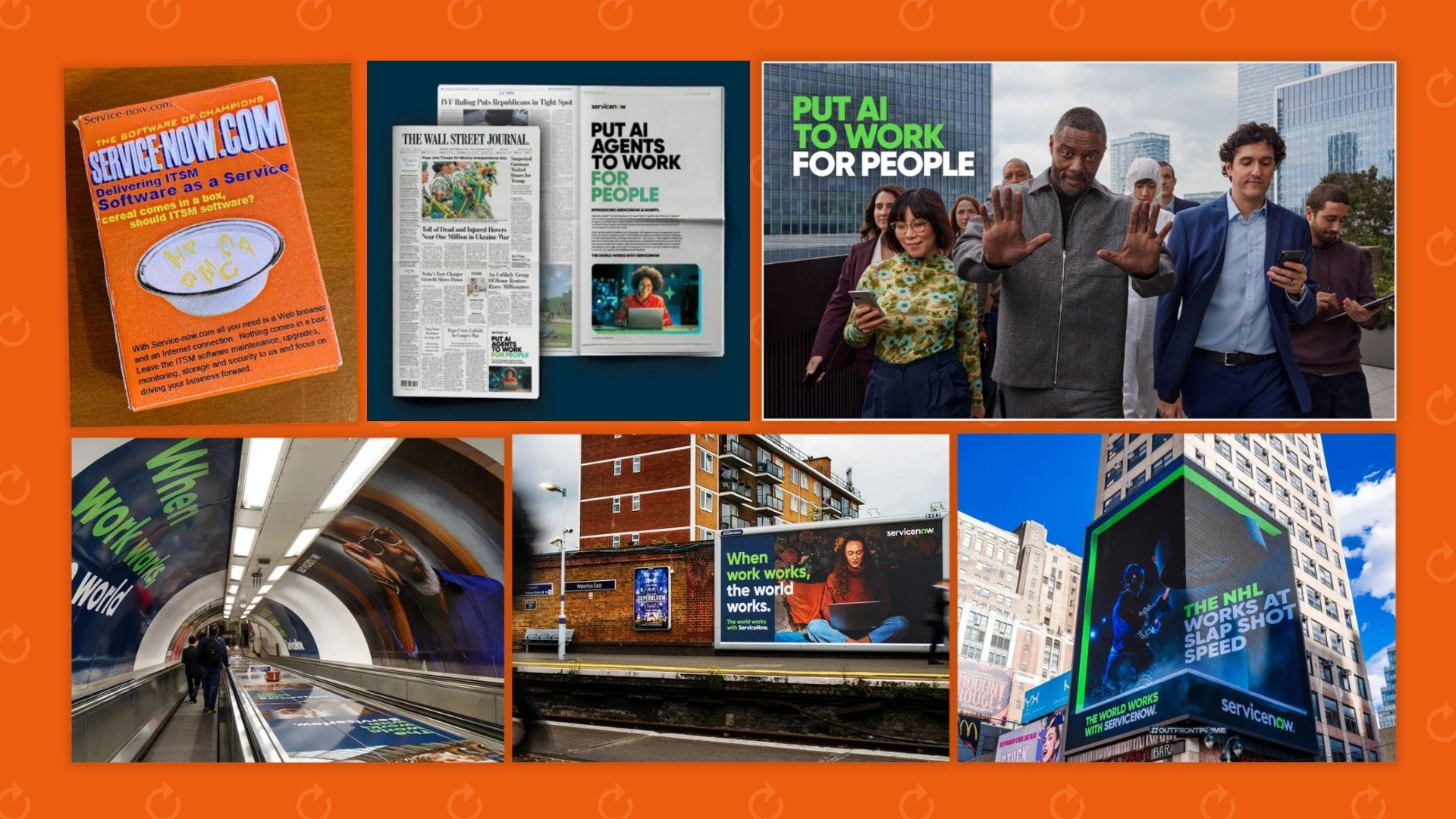
To match its growing trajectory, ServiceNow’s latest campaign, Put AI to Work for People, stars none other than Idris Elba, who is also the company’s new Global Brand Ambassador. This isn't the first time ServiceNow has departed the mundane landscape of B2B marketing.
ServiceNow’s collaboration with BBDO has produced some standout campaigns like Willy Wonka, Let’s workflow it, Work Your Way Back, and Taking Care of Business. These campaigns, spanning TV, YouTube, digital, and social media, have helped ServiceNow stand out in the crowded B2B tech space.
3. Social Media Marketing
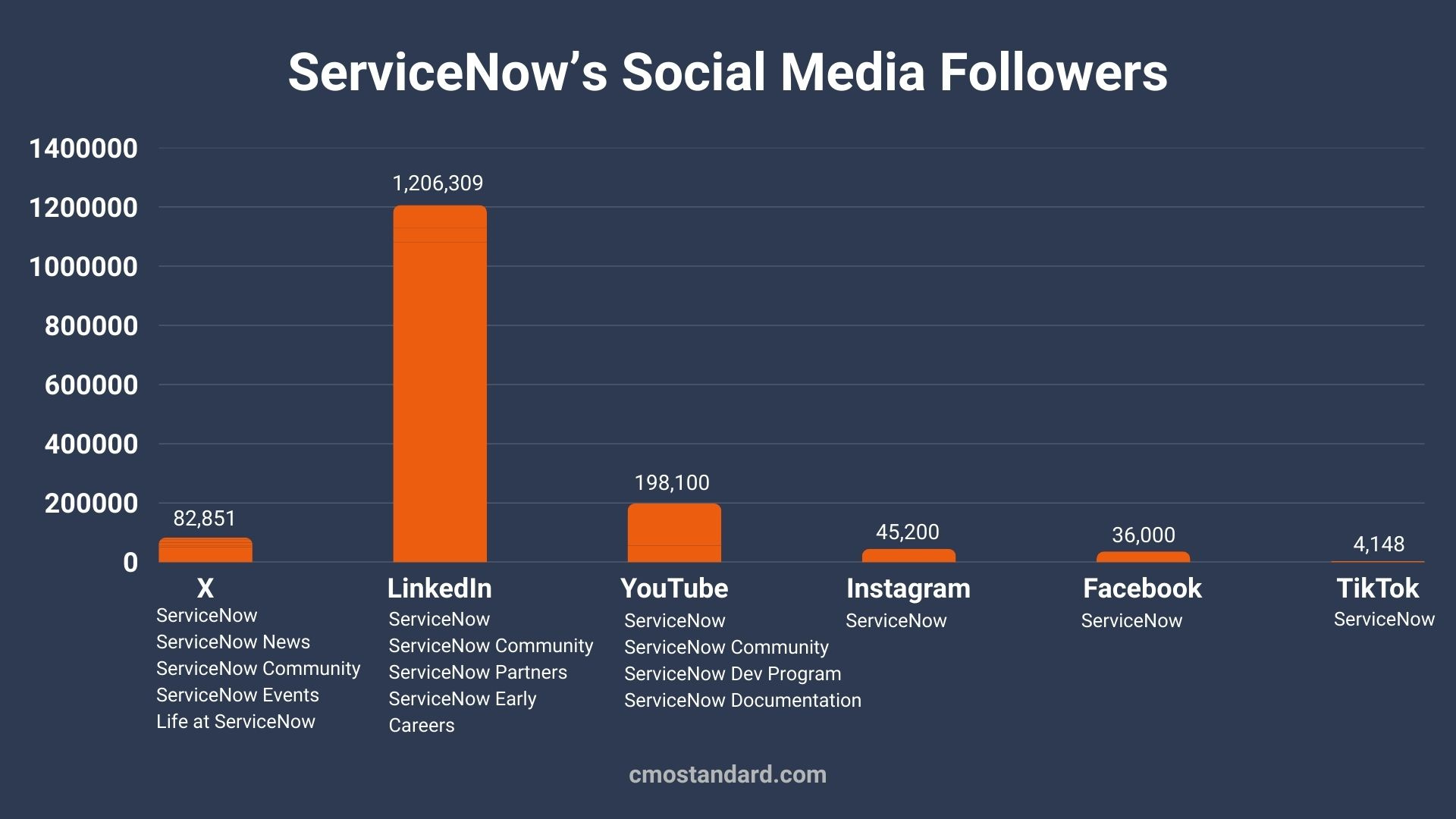
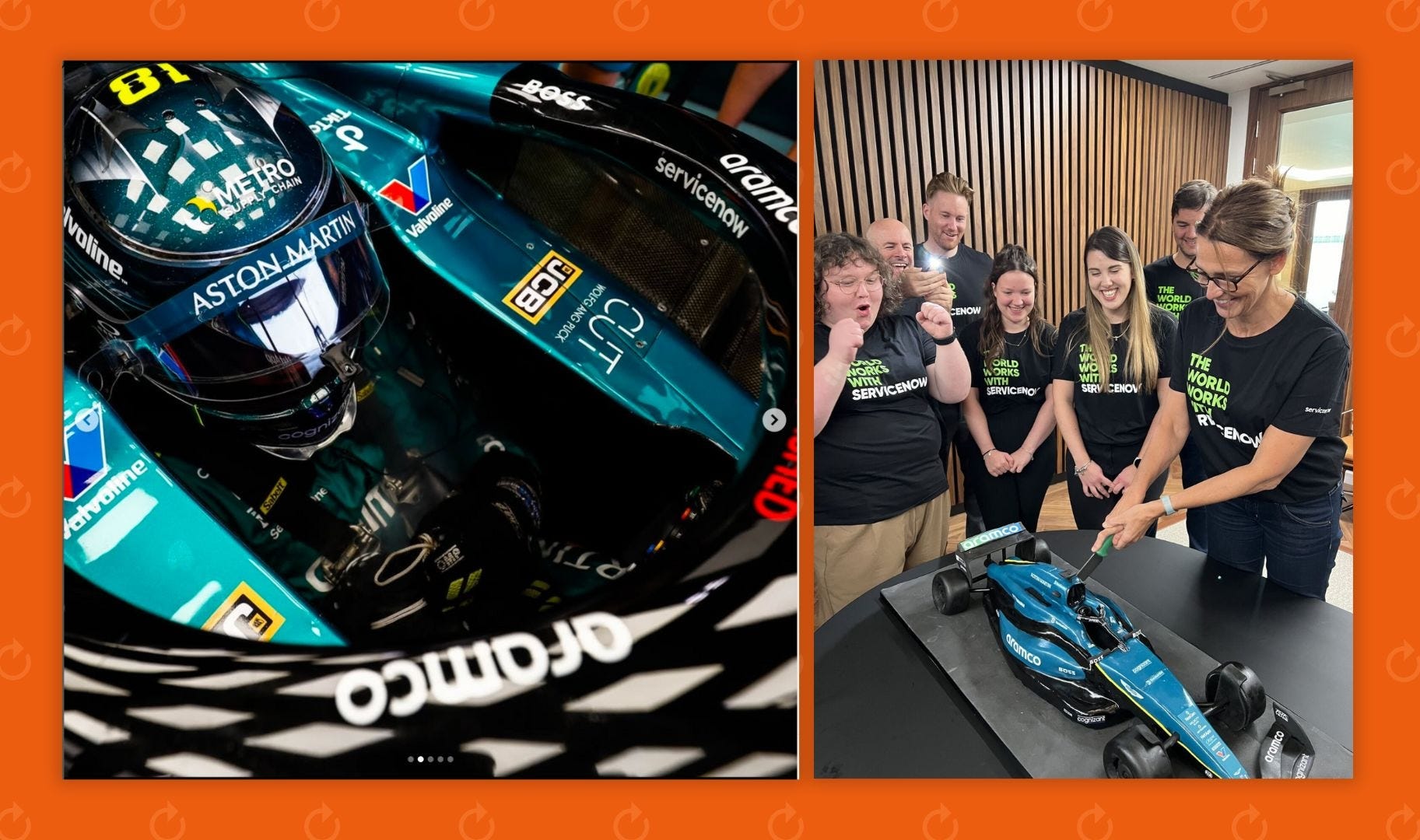
ServiceNow’s LinkedIn highlights events like the Berlin Laver Cup and Diwali, along with partnerships and TV appearances. X features localized customer stories and creative posts, like Aston Martin cakes and AI explained to a 4th grader.
YouTube focuses on careers, coding, and platform insights, while Instagram showcases employees and products. Facebook emphasizes customer success stories, and TikTok shares employee stories, career advice, and tech insights.
4. Advertising Strategy
From full-page ads in The Wall Street Journal to sponsored content on Forbes, ServiceNow’s advertising strategy dominates multiple platforms. Billboard campaigns stretch from Times Square to Bangalore, showcasing its global reach.
On LinkedIn, ServiceNow’s multilingual ads feature case studies, webinars, analyst reports, and event promotions. Ads across out-of-home, Google, Facebook, and YouTube mark a significant evolution from the days of advertising on cereal boxes.
5. Serial CEOs
Exceptional leadership has been a driving force behind ServiceNow’s hypergrowth. In 2011, Frank Slootman joined ServiceNow from Data Domain, steering the company through its IPO and increasing revenue from $93 million to $1.4 billion—a 14x jump.
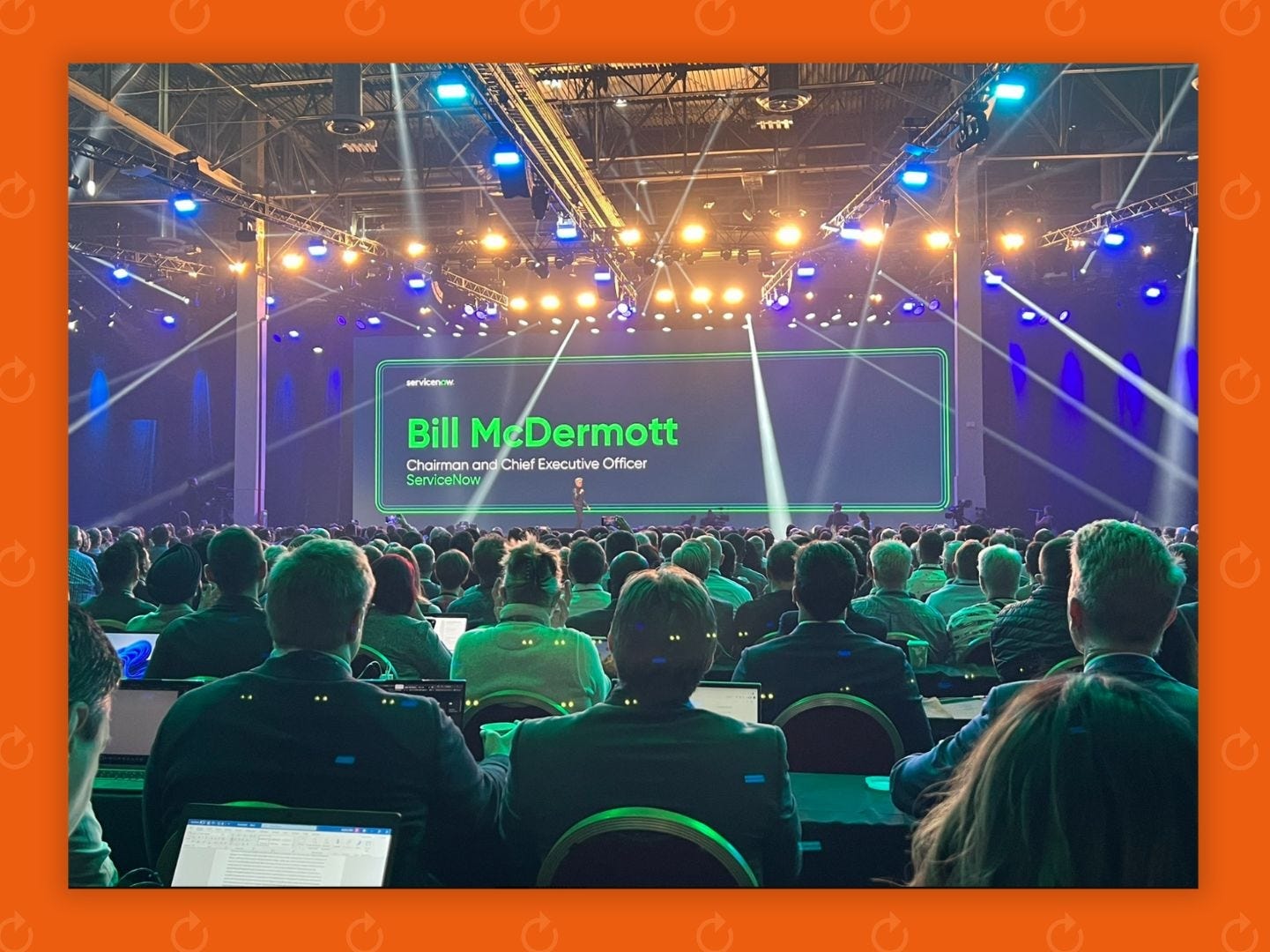
In 2017, former eBay CEO John Donahoe took over, tripling the company’s market capitalization. In 2019, Bill McDermott joined from SAP and led the company into the Fortune 500, cementing its status as one of the world’s most valuable companies.
Bill aims to grow revenue from $11 billion to $30 billion and position ServiceNow as the leading enterprise software company of the 21st century. The personal brands and influence of these CEOs have been pivotal to ServiceNow’s meteoric rise.
🔍 Inside Scoop
When Frank Slootman arrived at ServiceNow, he opened an office in the Bay Area. The company had sports tickets for the San Diego team but none for their newly established Bay Area team. To keep things fair, Frank asked to get rid of the tickets.
Weeks later, he discovered some employees had still attended the game using those tickets. Frank immediately fired the person in charge. This direct, no-nonsense style didn’t sit well with Fred, who was struggling to transition from CEO to his new role as Chief Product Officer.
Soon after, Fred saw the impact of Frank’s tough decisions—contracts rewritten, patents filed, product pipelines expanded, and top talent recruited. Over time, his trust in the leadership grew, and he never returned to the CEO role.
6. Company Culture
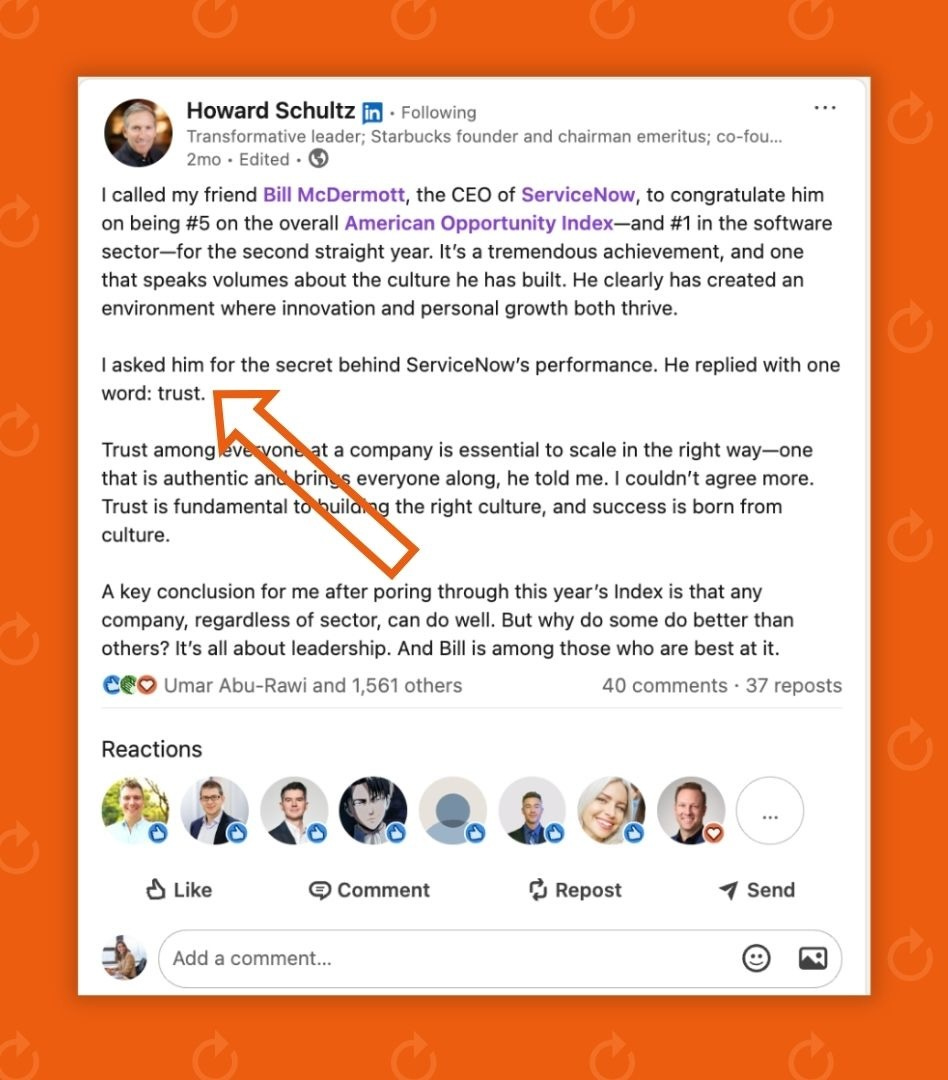
ServiceNow’s humble and hungry culture has earned accolades, but its true power lies in the trust it fosters. Employees proudly paint their nails in brand colors, customers advocate its products, and partners fiercely defend it.
In return, ServiceNow celebrates its community with gestures as big as billboards and as personal as awards. This loyalty is no accident. It reflects ServiceNow’s deep-rooted values, its focus on innovation, and its unwavering commitment to customers.
🔍 Inside Scoop
At 16, Fred Luddy dropped out of school and left home in his parent’s station wagon with $180 in his pocket. He picked strawberries and washed cars to make ends meet, but by 18, he found himself back in his Indiana hometown, working at a factory.
It was there that Fred first encountered a computer. Spellbound, he asked to work with it and was handed a programming book. He built an order entry application that removed tedious, repetitive tasks—so effective it made his colleague cry.
7. Partner Program
ServiceNow estimates its Total Addressable Market (TAM) at $275 billion, with partners playing a pivotal role in capturing this opportunity. Its Partner Program supports resellers, service providers, and consultants through resources and funds.
This collaboration is strengthened through initiatives like the Global Partner Summit and Quarterly Partner Briefings to accelerate new customer acquisitions. ServiceNow also hosts dedicated Partner Awards to honor the contributions.
“The aim is to move beyond the 8,000 customers the company has today to 50,000. That partner resell piece is going to be massively important.”
- Paul Smith, Chief Commercial Officer
🔍 Inside Scoop
ServiceNow demo instances come with the usual sample data: employees, incidents, assets, and locations. But these locations aren’t as random as they seem. Many of them are actual addresses of Hooters restaurants across the U.S. Take 1111 W 120th Ave, Westminster, CO, or 1211 13th Avenue Dr SE, Hickory, NC, for instance. It’s a fun reminder of the company’s unconventional beginnings.
8. Resource Center
ServiceNow’s resource center offers content in over 10 languages, including analyst reports, case studies, and white papers. Customer case studies are thoughtfully categorized by industry, product, region, and featured partners for easy navigation.
The Developer Portal equips developers with tools, and training, while blog and newsroom share company updates, and media highlights. For quick answers, the FAQ section covers a wide range of topics, making it easy for users to find what they need.
9. A People-First Brand
In 2023, ServiceNow became the official partner of the Aston Martin Formula One® Team, securing one of the most prestigious branding spots—its logo on the legendary Formula One car. This logo, however, is more than just a symbol.
In 2018, ServiceNow rebranded its logo to reflect its people-first ethos by replacing the power button in the "o" of "Now" with the profile of a person. The red and grey palette was swapped for shades of green, signaling growth and innovation.
🔍 Inside Scoop
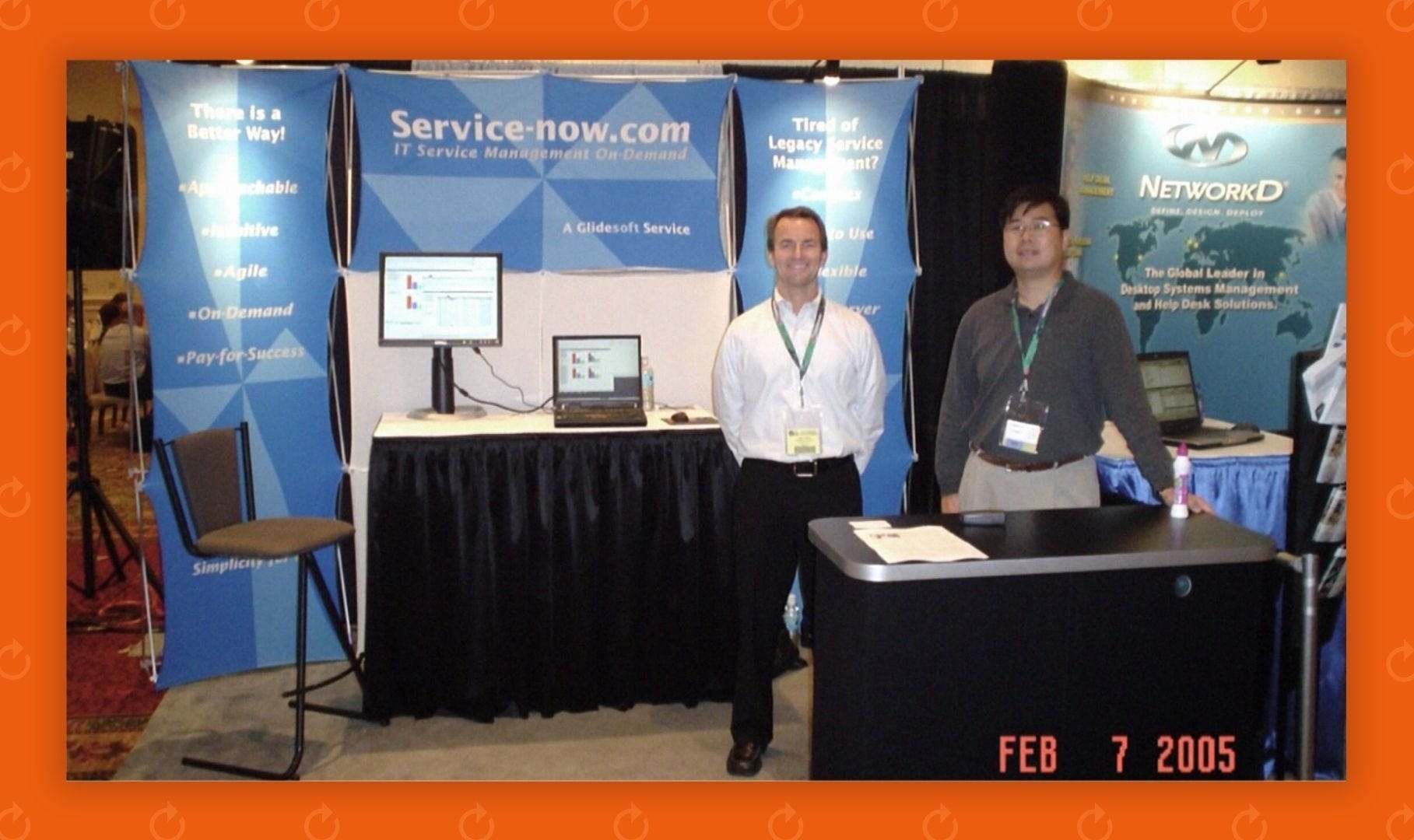
ServiceNow was originally launched as GlideSoft in 2003. However, the investors didn’t share Fred’s enthusiasm for the name, feeling that the name evoked unintended associations with adult lubricants.
In 2006, the company was renamed Service-Now.com. Later, the dash and dot com were dropped, and it became known simply as ServiceNow. Even today, traces of the original name appear whenever a developer uses a "GlideRecord" or the "gr." API.
10. ServiceNow Community and Org
The ServiceNow Community, with nearly 750,000 active members, fosters collaboration, problem-solving, and knowledge sharing. To keep members engaged, ServiceNow hosts SNUGs—local gatherings for sharing best practices.
Beyond its community, ServiceNow.org partners with industry leaders to amplify impact in non-profit sectors. This commitment reflects Fred Luddy’s values, exemplified through his philanthropy via the Luddy Family Foundation.
Marketing Statistics
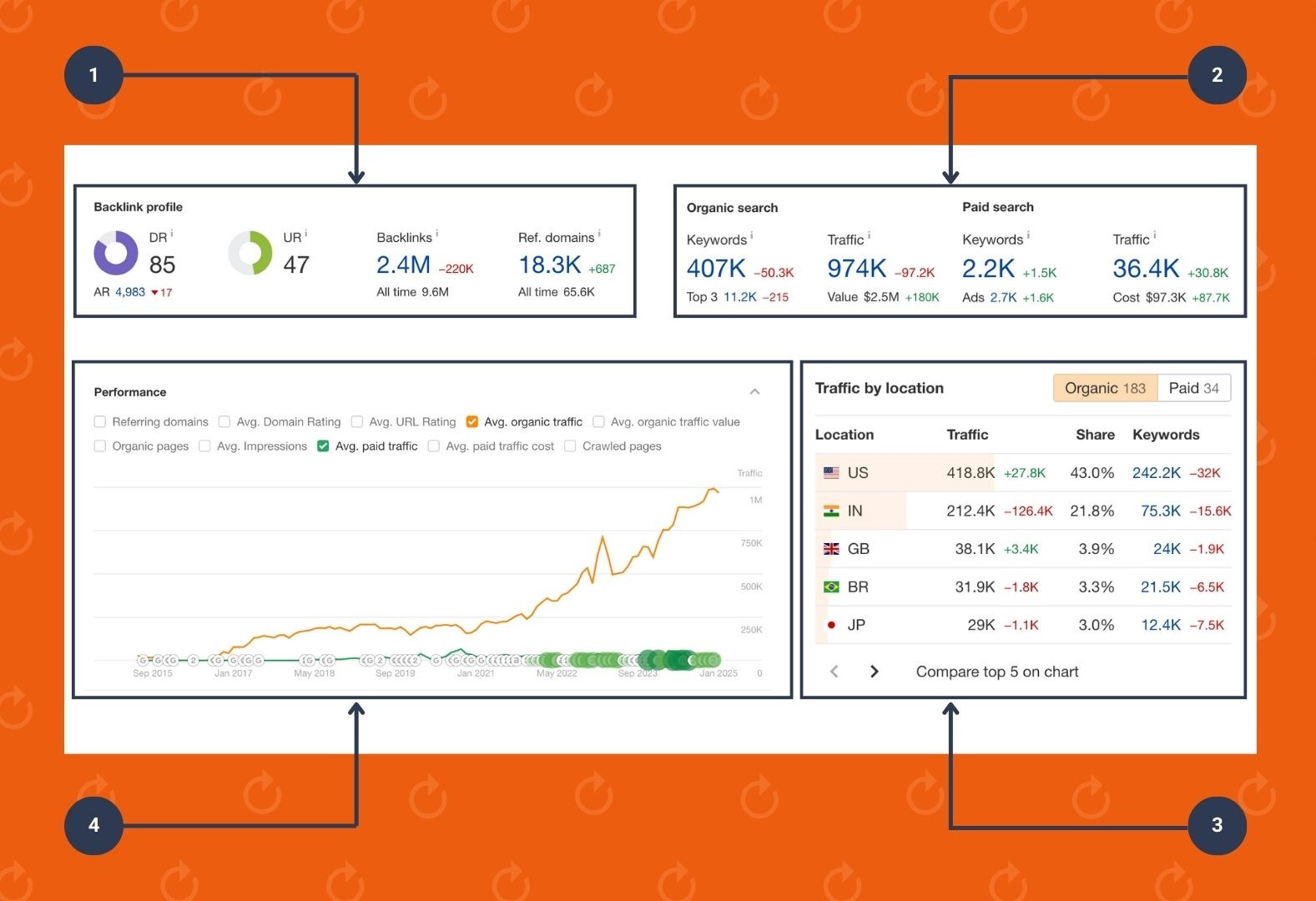
Backlink Profile: ServiceNow demonstrates a solid backlink profile with a Domain Rating (DR) of 85 and a URL Rating (UR) of 47. The company has 2.4 million backlinks from 18.3K referring domains, reflecting its strong online authority.
Search Engine Performance: ServiceNow ranks for 407K organic keywords, generating 974K monthly organic visits valued at $2.5M. In paid search, it ranks for 2.2K keywords, driving 36.4K visits with a traffic cost of $97.3K. Organic and paid search performance highlight robust search visibility.
Traffic by Location: The majority of ServiceNow’s traffic comes from the US, followed by India, GB, Brazil, and Japan. Organic traffic has grown notably in the US and Great Britain, while traffic in India has declined.
Trend Analysis: ServiceNow’s organic traffic has shown consistent growth over time, as seen in the performance chart. Paid traffic, though smaller, has seen a notable increase, showcasing the platform’s expanding reach and marketing success.
Conclusion
ServiceNow was just three years old when it landed Deutsche Bank as a customer—a monumental win for a tiny startup. It wasn’t luck; ServiceNow was the only company bold enough to deliver what the bank needed.
Since then, it has transformed an industry plagued by clunky systems with its consumer-grade experience, bold code, and resilient culture. Today, it stands as one of the world’s most valuable companies.
But ServiceNow’s real strength lies in its journey—a tale of risks, lessons, and relentless innovation. This remarkable story will soon be captured in the book Insurmountable Opportunity by Wally Marx.
TL;DR CMO Brief
☁️ High-Level Cloud Architecture: ServiceNow grew by tackling daunting challenges, including operating as a cloud platform without cloud infrastructure. A turning point came when its VP of Engineering standardized the system, transforming constant outages into a scalable, stable foundation that solidified its market position.
🙋 Customer-First Approach: Founder Fred Luddy’s hands-on, feedback-driven philosophy shaped ServiceNow’s intuitive, low-code platform. It evolved from an ITSM tool to a platform for HR, customer service, and beyond, automating workflows for more than 8,500 companies, 85% of which are Fortune 500.
🎯 Sticky B2B Marketing: ServiceNow redefines B2B marketing with bold campaigns like Put AI to Work for People, starring Idris Elba. Creative ads and billboards from New York to Bangalore amplify the company’s visibility. Flagship events like Knowledge and World Forum drive engagement and showcase ServiceNow’s transformative impact.
🛡️ Bold Leadership Decisions: When VMware offered $2.5 billion to acquire ServiceNow, Sequoia Capital’s confidence in the company’s potential led to rejecting the offer. Today, ServiceNow is valued at over $220 billion—88x the VMware bid—proving the value of long-term vision.
🌱 Culture-Driven Brand: ServiceNow’s 2018 rebrand, featuring a person’s profile in place of the power button in "Now," embodies its people-first philosophy. The green palette symbolizes growth, reflecting the company’s collaborative, humble, and hungry culture—one that not only earns accolades but also inspires trust.